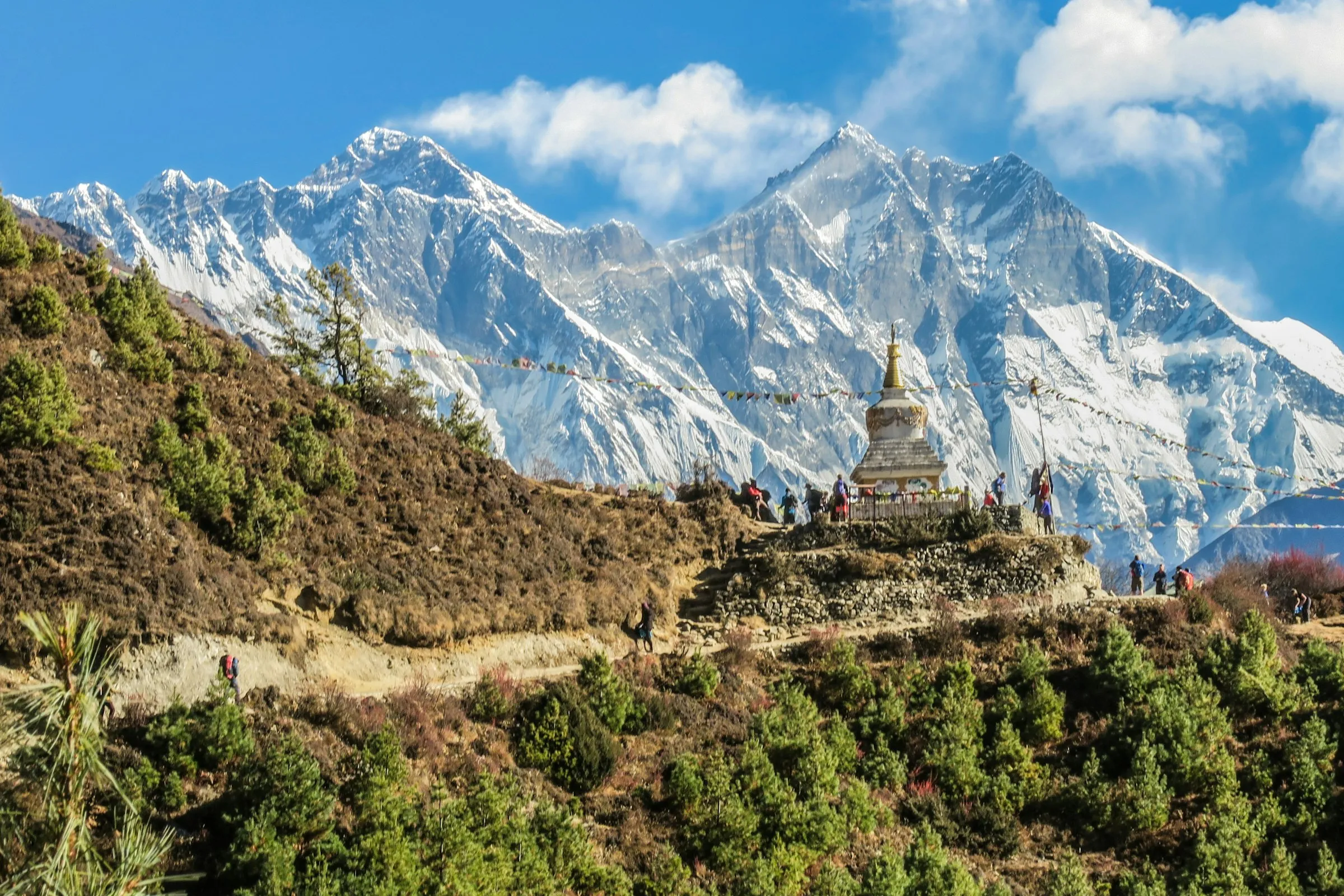
Everest Base Camp needs no climbing skills, but it is the hardest of our treks to spend time on. You sleep above 3,000 m on most nights, and above 5,000 m at Gorak Shep, where the air holds roughly half the oxygen it does at sea level.
The hard parts
- The climb to Namche Bazaar. Day two crosses the Dudh Koshi on high suspension bridges, then climbs steeply for hours to Namche at 3,440 m.
- Day after day above 4,000 m. From Dingboche onwards, you walk slowly, sleep lightly and eat less. This is normal, and it’s why the itinerary includes two rest days.
- Gorak Shep and Kala Patthar. Gorak Shep (5,164 m) is cold and basic, and the pre-dawn climb up Kala Patthar (5,545 m) is the hardest hour of the trek.
- Lukla flights. Weather often delays flights in and out of Lukla, so build in spare time.
How to train
- Walk hills or stairs two or three times a week for eight to ten weeks before you go.
- Do back-to-back long walks with the pack you’ll carry.
- Build general fitness, but don’t expect it to protect you from altitude sickness. Pacing and acclimatisation do that.
Who it suits
Fit walkers who are comfortable with basic lodges, cold nights and slow days at altitude. If you have heart, lung or blood-pressure problems, talk to your doctor before booking.